Afterglow
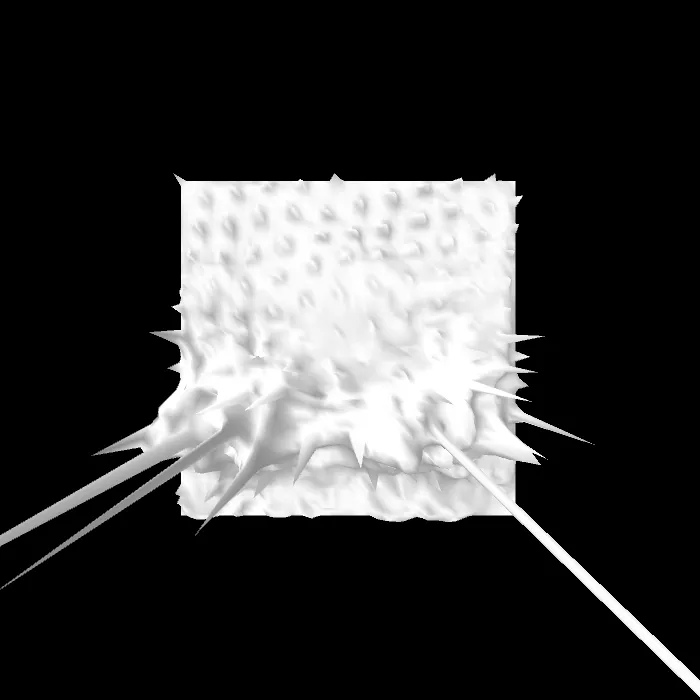
A spring net in Processing, first meant to show where infrasound came from, that ended up bulging like fabric hit by objects thrown from behind.
Infrasound lies below 20 Hz, under the threshold of hearing, yet some people sense it anyway, as a feeling of tightness, sleeplessness or fatigue. Michael Härtel and I wanted to see what it might look like. Our first idea was to catch it, Ghostbusters-style: a trap you leave at a site for a while, microphones inside logging where the infrasound comes from and how strong it is, a gauge outside showing how full it is. Like a ghost trap, it would only be emptied back at headquarters. The recording would then play in the fulldome as a time-lapse over a panorama photo of the site, underscored by the lowest tones we could play.
A net seemed the right image for something caught, so I wrote one in Processing, »Netzverzerrung« (net distortion): a square grid of particles tied together by toxiclibs springs, where every finger on the trackpad, passed in over TUIO, pulls or pushes the mesh at the same time. It was meant to float over the panorama and show where the infrasound came from and how strong it was. A second version stretched an image along with the net, and the whole thing ran smoothly. A control window of sliders for spring strength, drag, trails and line weight, with ten slots for presets, turned it into an instrument for trying out looks.
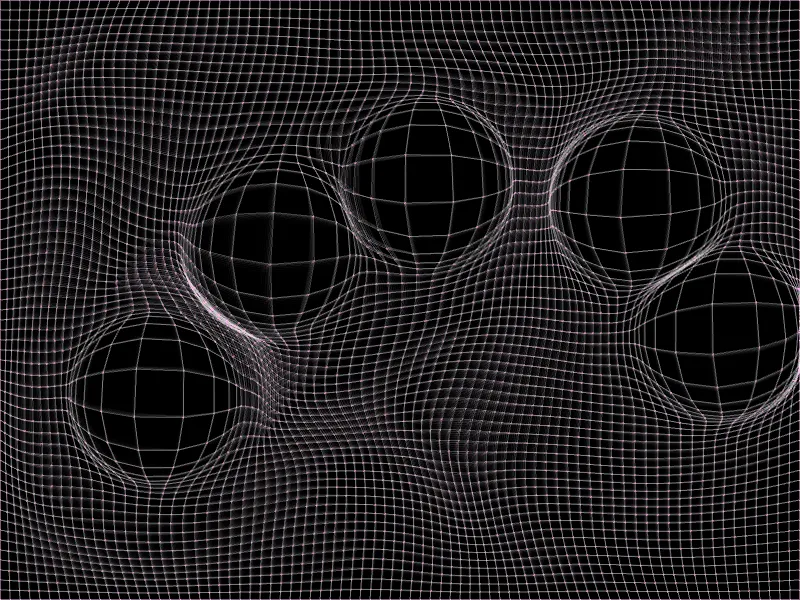
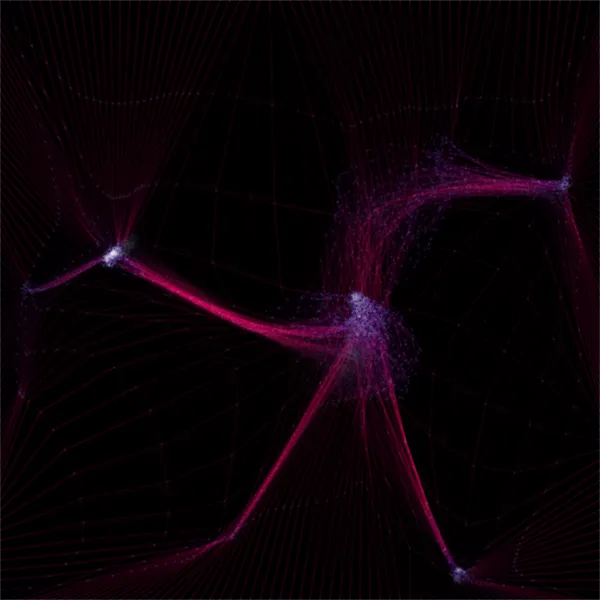
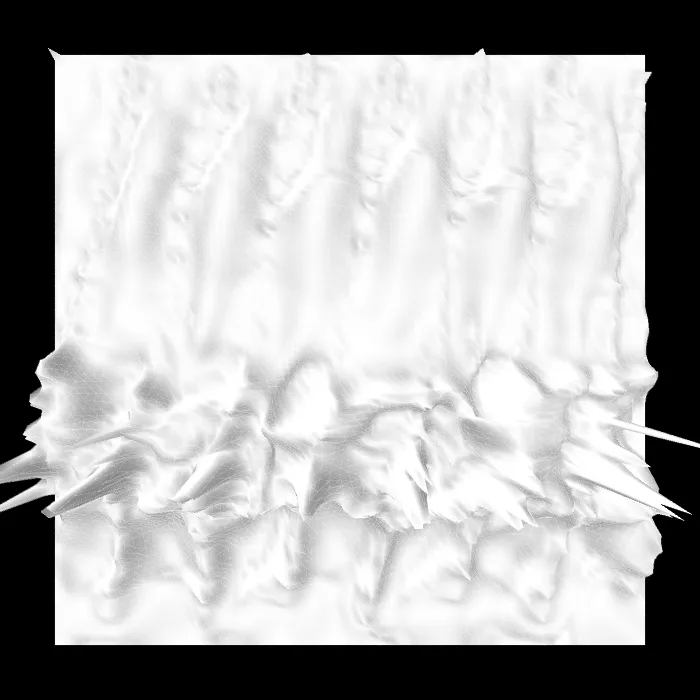
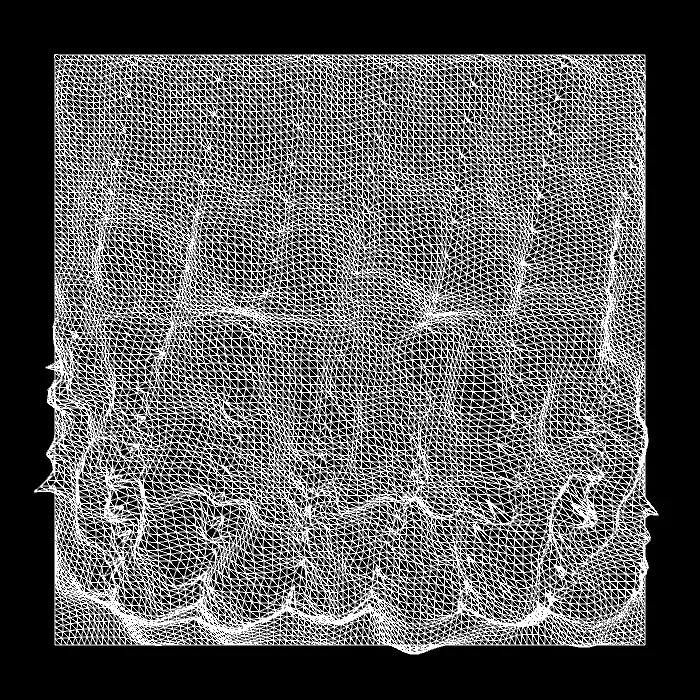
The trap never got built. At the interim review, with no prototype yet, we could only run the intended look in the dome, and in the end we gave up on the sensor: infrasound microphones are outrageously expensive, and building one yourself takes very clean conditions we didn’t have. Without it there was no site to photograph and no dome show to prepare. So we refined the net instead and gave it depth: designed to be fed live from the measuring device the course had lent us, through a microphone and without hacking the device, it now bulged along the z-axis like fabric hit by objects thrown from behind, each bulge marking the frequency and strength of the incoming signal, with the sound on a PA. Michael summed it up as an extreme case of a project not going to plan, and ending somewhere good we would never have found otherwise.
Afterglow was a course project in Interface Design at FH Potsdam in winter 2011/12, supervised by Prof. Danijela Djokic. The brief asked how electromagnetic radiation could be shown beyond the familiar visualizations, and left open which kind of invisible wave to take on. Michael had come across infrasound the summer before, in the course where we made Brain State Sharing. The net’s code is on GitHub, and Michael’s write-up, with more process images, is on Incom (in German).